
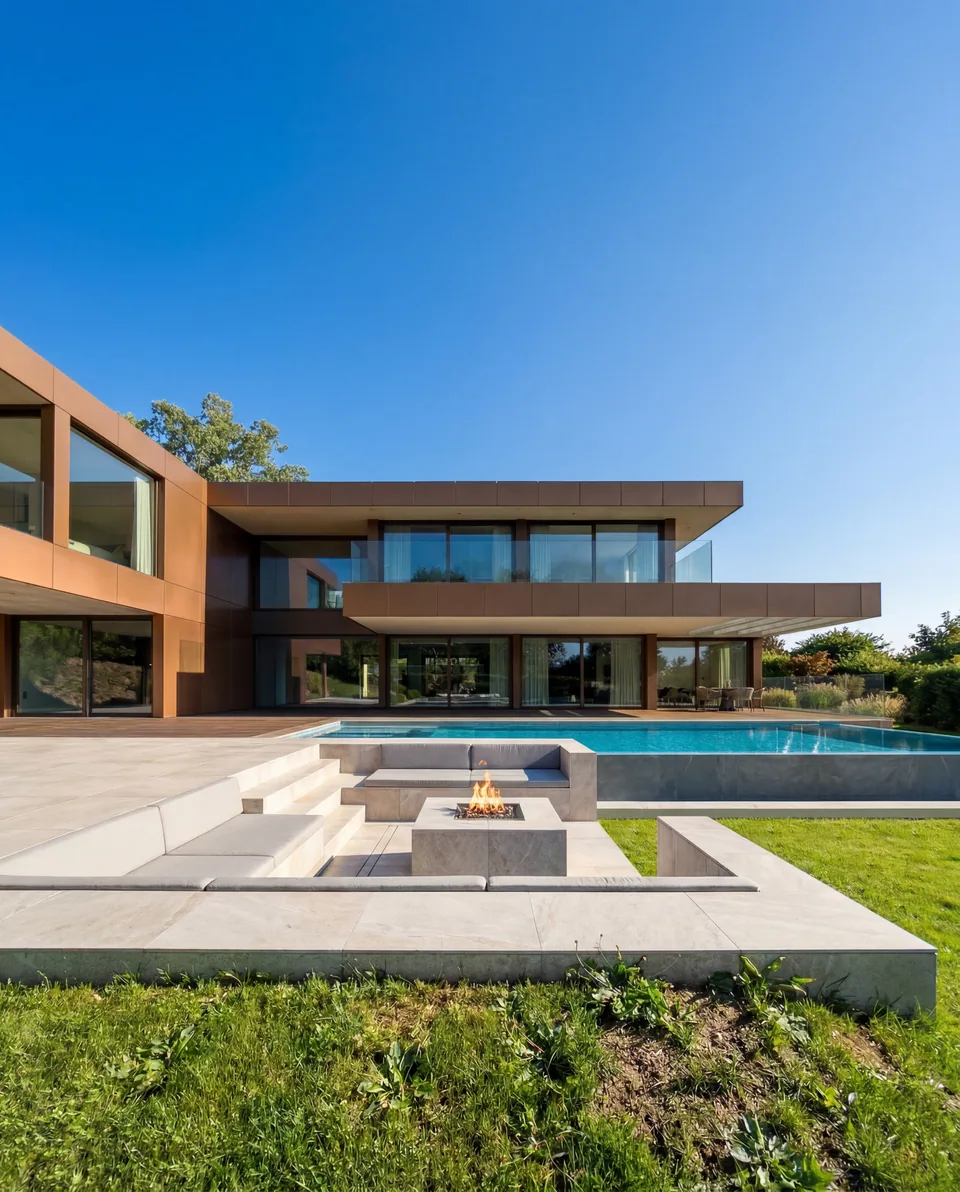
A tender price over budget doesn't mean the project is dead — it means the design needs to be rethought. Here's how we rescued a villa at Palmares Ocean Living & Golf that had already been through full tender, and what the process of value engineering actually involves.
It happens more often than the industry likes to admit. A client has a plot, appoints an architect, works through a design they are genuinely excited about — and then goes out to tender. The quotes come back. And the numbers, when laid out in black and white, simply don't work.
At that point, most people face what feels like an impossible choice: scale back the vision, find more capital, or walk away. None of those feel good when you have already spent months and significant money getting to tender stage.
There is a fourth option, and it is the one that is most often overlooked: value engineering. Not stripping the project back to a shell, but rethinking how the same architectural ambition gets built — smarter, leaner, and at a cost that actually makes sense.
What Value Engineering Actually Means
The term gets misused. Value engineering is not a polite way of saying "make it cheaper." It is a disciplined process of interrogating every element of a design and asking whether there is a better way to achieve the same result for less cost. Sometimes that means changing a structural approach. Sometimes it means respecifying a material that looks identical but costs a fraction of the original. Sometimes it means redesigning a section of the building entirely because the original configuration was expensive to construct for no good architectural reason.
Done well, value engineering produces a design that is functionally and aesthetically equal to the original — or better — at a cost the client can actually build to. Done badly, it produces a compromised building that nobody is proud of. The difference is almost entirely in who is doing it and how much they understand about construction costs at a component level, not just at a headline figure.
This is not a task for an architect alone, however talented. It requires someone who understands how buildings are actually priced and built — where contractors make their margin, where the real cost drivers are, and where money is being spent on things that add cost without adding value. That knowledge comes from the site, not the drawing board.
A Project at Palmares Ocean Living & Golf
Earlier this year, a private client came to us with exactly this problem. He had a plot at Palmares Ocean Living & Golf — one of the Algarve's most prestigious resort addresses, on the edge of Lagos with direct access to the golf course and views across the Meia Praia estuary. The design was strong. The architect had done good work. But it had gone through full tender with contractors, and the build cost had come back at a level that made the project's economics unviable at the client's target exit value.
He needed the project rescuing. Not just repriced — genuinely rethought.
Orla took on the full value engineering exercise. Over the following six months, we redesigned the property from the ground up: same site, same brief, same architectural language — but with every structural and specification decision scrutinised for cost efficiency. The result was a resolved design that delivered what the client wanted to build, at a cost that made the numbers work.
€7M+
target exit value
The project moved from economically unviable to a resolved opportunity with two clear routes to delivery — and a defined exit — in six months.
The Palmares Planning Layer
A project within a resort like Palmares carries an additional complexity that clients often don't anticipate: the resort's own planning consultation process. Before anything goes to the local Câmara Municipal, it has to pass through the Palmares board, which has its own design standards and approval requirements for any new build within the estate. This is separate from — and runs alongside — the standard Portuguese planning process. It adds a layer of navigation that requires both an understanding of how the resort operates and relationships within it.
We have both. Our contacts at Palmares and our established working relationship with the local council meant we were able to move the consultation forward efficiently, without the delays that typically occur when a client or their professional team is working without that existing context. The client arrived not knowing anyone in the local system. By the time the planning consultation was complete, he had a dedicated network — architects, engineers, legal contacts, resort liaisons — that he could rely on for every stage of the project ahead.
Two Routes to Delivery
With a resolved design and planning consultation complete, the client now has two clear options for how to build.
Route 01
Modular via InHaus
A fixed price agreed at the outset, a compressed programme compared to traditional build, and a finished product of consistent, verifiable quality. The certainty on cost and timeline is particularly valuable at the top end of the market, where delays and cost overruns directly erode the margin that makes a project viable.
Route 02
Traditional build via Orla
Managed by Orla with our established construction partners — contractors we have worked with, assessed, and trust to deliver to the standard a Palmares villa demands. This route offers more flexibility in specification and finish, and is the right choice for clients whose design requires bespoke elements that sit outside what modular construction can accommodate.
Both routes are on the table. The decision will depend on programme, specification, and the client's own priorities — and we will be there to manage whichever he chooses through to handover.
If Your Quote Has Come Back Over Budget
The single most important thing to understand about a tender price that doesn't work is that it is feedback about the design, not a verdict on the project. Buildings cost what they cost because of the decisions made on the drawing board. Change those decisions — the right ones, in the right ways — and the cost changes with them.
If you have a design that has come back over budget, or a project that has stalled because the numbers don't stack up, we are worth talking to. Value engineering is one of the core things we do, and the earlier in the process we are involved, the more we can do with it.